
For years, the feud between 50 Cent and Ja Rule has existed like a dormant volcano in hip-hop culture — quiet on the surface, but never truly extinct.
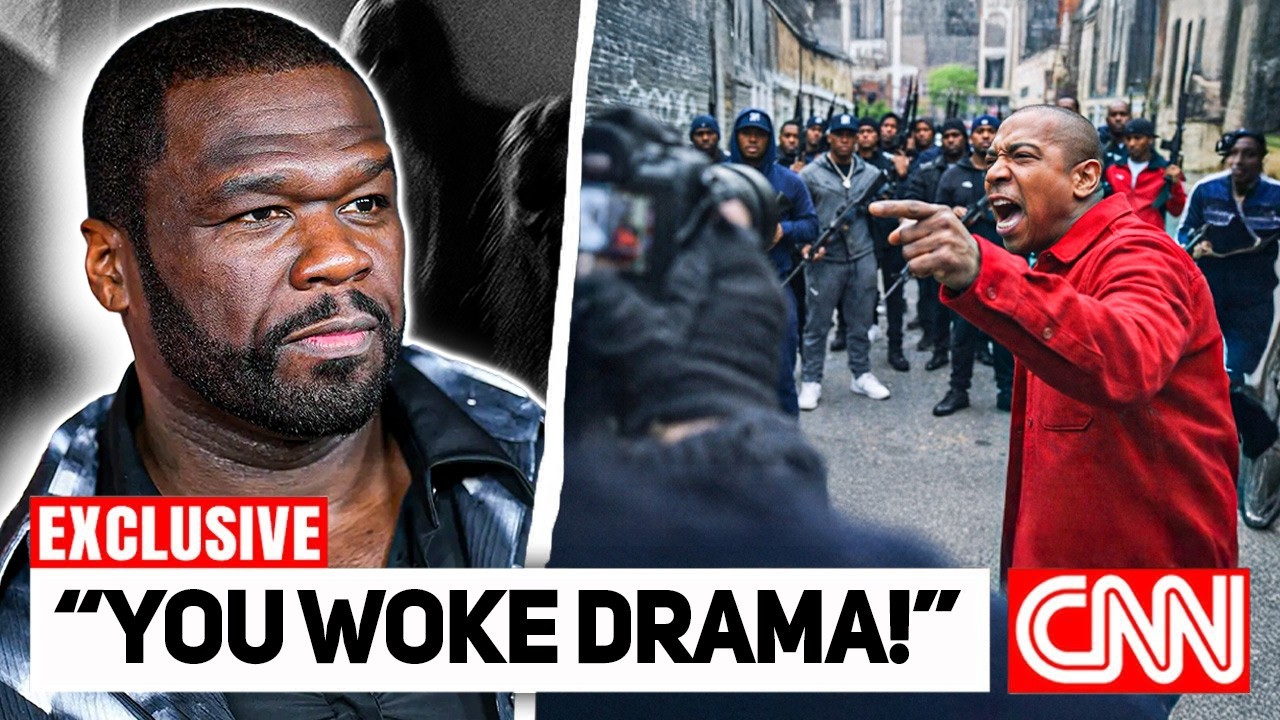
Fans have watched them trade insults, lawsuits, interviews, and social media jabs for more than two decades.
Many ᴀssumed the hostility had settled into something almost theatrical — predictable, even nostalgic.
Until now.
It didn’t begin with a diss track.
It didn’t explode during a live interview.
It wasn’t even a public statement.
It was a message.
Short.
Direct.
Unadorned.
No one outside their inner circles has seen the full text.
What leaked — if it can even be called a leak — was only a fragment.
A single line reportedly sent from Ja Rule to 50 Cent.
No profanity.
No overt threat.
No dramatic punctuation.
Just a sentence that, depending on how you read it, could either be interpreted as an olive branch… or a blade carefully wrapped in silk.
And that ambiguity is precisely what has set the internet on fire.
According to sources close to the situation, the message referenced “unfinished business.” Three words.
Innocent in isolation.
Explosive in context.
What unfinished business? Financial? Personal? Artistic? Or something older, buried beneath layers of public spectacle and private resentment?
Within hours of whispers about the text surfacing, 50 Cent responded — not by denying it, not by laughing it off, but by posting a cryptic message of his own.
He didn’t name Ja Rule directly.
He didn’t have to.
The timing was too precise.

The tone too sharp.
The subtext too heavy.
“You can’t rewrite history when the receipts still exist.”
That was all he wrote.
Fans immediately began dissecting the phrase.
Was he referring to past allegations? Old industry betrayals? The early 2000s street politics that first ignited their war of words? Or was this something new entirely — a dispute that never made headlines, now resurfacing behind closed doors?
To understand why a simple message could trigger such a reaction, one has to revisit the origins of their rivalry.
In the late 1990s and early 2000s, their conflict wasn’t just about chart positions or lyrical dominance.
It was personal.
It involved crews, alliances, shifting loyalties, and accusations that went far beyond music.
Diss tracks flew like bullets.
Interviews dripped with venom.
At one point, it seemed less like entertainment and more like escalation.
Over time, the public clashes became almost ritualistic.
50 Cent would mock Ja Rule online.
Ja Rule would respond in interviews.
Fans picked sides.
Memes multiplied.
The tension became part of hip-hop folklore.
But folklore can obscure the truth.
And sometimes, it hides unresolved matters.
That’s why this recent exchange feels different.
Ja Rule has not publicly confirmed the exact wording of his message.
When asked during a recent appearance whether he had reached out to 50 Cent, he smiled — not dismissively, but knowingly.
“Sometimes men talk,” he said.
“Sometimes it ain’t for the crowd.”
That statement alone deepened the mystery.
If it wasn’t for the crowd, why did it become public at all? Was it leaked intentionally? Accidentally? Or strategically?
Industry insiders suggest the message may have been sent in response to a business development — possibly related to streaming rights, catalog ownership, or a documentary project rumored to be in early stages.
Others speculate it was personal, tied to an event from years ago that never fully played out in court or conversation.
There’s another theory circulating online, one that has gained traction in fan forums: that Ja Rule’s message was an attempt at reconciliation, but framed in a way that acknowledged unresolved tension.
“Unfinished business” could imply closure.
It could suggest maturity.
Growth.
An attempt to finally end a rivalry that defined a generation.
But if that were the case, why did 50 Cent’s reaction feel defensive rather than receptive?

His follow-up posts only intensified speculation.
He shared an old pH๏τo from the height of their feud, captioned simply: “Some stories don’t need sequels.”
Was that a warning? A refusal? Or an invitation?
The silence between the two artists since those posts has been deafening.
No further clarifications.
No denials.
No interviews addressing the situation directly.
Just an online atmosphere thick with interpretation.
What makes this moment particularly volatile is timing.
Both artists have evolved beyond their early personas.
50 Cent has built a formidable empire in television production and business ventures.
Ja Rule has navigated controversy, reinvention, and public scrutiny.
They are no longer just rappers clashing over pride.
They are brands.
Legacies.
Insтιтutions in their own right.
And legacies are delicate.
A single misstep can reshape public perception.
A renewed feud could energize fans — or exhaust them.
A reconciliation could rewrite history — or appear calculated.
There’s also the psychological dimension.
When rivalries last as long as theirs has, they become part of idenтιтy.
Ending it requires vulnerability.
Continuing it requires stamina.
Reigniting it requires motive.
So what was the motive?
Some observers believe the message was intentionally ambiguous — designed to provoke a reaction without crossing a line.
In that interpretation, Ja Rule didn’t need to insult 50 Cent.
He only needed to remind him of something unresolved.
A private memory.
A disputed narrative.
A moment that still lingers.
Others argue that 50 Cent’s swift response suggests he felt challenged — not threatened, but questioned.

His career has been built, in part, on dominance.
On control.
On being the one who finishes conflicts, not revisits them.
If Ja Rule implied that something remained unfinished, it subtly disrupts that narrative.
Then there’s the possibility that this entire situation is being misread.
That the message was neutral.
Harmless.
That the tension exists more in the audience’s imagination than in reality.
But if that’s true, why hasn’t either side clarified?
Silence, in the age of instant communication, is rarely accidental.
Behind the scenes, mutual acquaintances reportedly attempted to mediate.
Not to broker peace — but to prevent escalation.
No one wants a return to the hostility of the early 2000s.
The industry has changed.
The stakes are different.
The consequences are broader.
Yet conflict sells.
Curiosity spreads.
And mystery amplifies both.
What’s undeniable is that this single message has reignited conversation about a rivalry many ᴀssumed had settled into harmless banter.
It has reminded fans that beneath the memes and interviews lies something real — something that once carried genuine risk and resentment.
Perhaps that’s why it feels tense.
Not because of what was said, but because of what wasn’t.
“Unfinished business” could mean a thousand things.
It could reference loyalty.
Betrayal.
Money.
Respect.
It could signal peace talks or a warning sH๏τ.
Until either man chooses to reveal more, the line will hang in the air — suspended between reconciliation and rekindled war.
And maybe that’s the point.
In hip-hop, narrative is power.
Control the story, and you control the legacy.
By sending a message that can’t be easily decoded, Ja Rule may have shifted the narrative without saying much at all.
By responding cryptically, 50 Cent ensured the tension remains alive — but undefined.
Two veterans.
One sentence.
A history too complex to summarize in a headline.
Whatever happens next — whether it’s silence, a sit-down conversation, a collaborative surprise, or another round of public sparring — this moment has already accomplished something significant.
It reminded the world that some rivalries don’t fade.
They evolve.
They adapt.
They wait.
And sometimes, all it takes to wake them up is a message that doesn’t quite explain itself.