😱 Greg Biffle Crash Prelim Report 2: How AMBIGUITY Took Down the Citation! 😱

Greg Biffle Crash Prelim Report 2: How AMBIGUITY Took Down the Citation
There was no thrust reverser deployment, no door opening mid-flight, and no engine tearing itself apart.
Once you clear all of that away, what remains is something actually harder to deal with.
This follow-up is about the Cessna Citation 550 crash at Statesville, North Carolina—the tragic accident that took the lives of Greg Biffle and his family in December 2025.
The preliminary report reveals a situation where the airplane never clearly failed, but the cockpit slowly became a place where the crew couldn’t fully trust what it was telling them.
And that’s significant because unreliable systems are often more dangerous than broken ones.
Broken systems provide you with a checklist; unreliable systems leave you with questions.
So today, we’re going to talk about ambiguity, electrical margins, and how a series of small, individually manageable issues can quietly stack up until there’s no room left to recover.
Let’s dive in.
One of the most striking aspects of this preliminary report is that almost every abnormality is described in soft language.
Nothing failed outright.
Things were not working properly.
Indications didn’t line up.
Lights didn’t behave as expected.
That distinction is important.
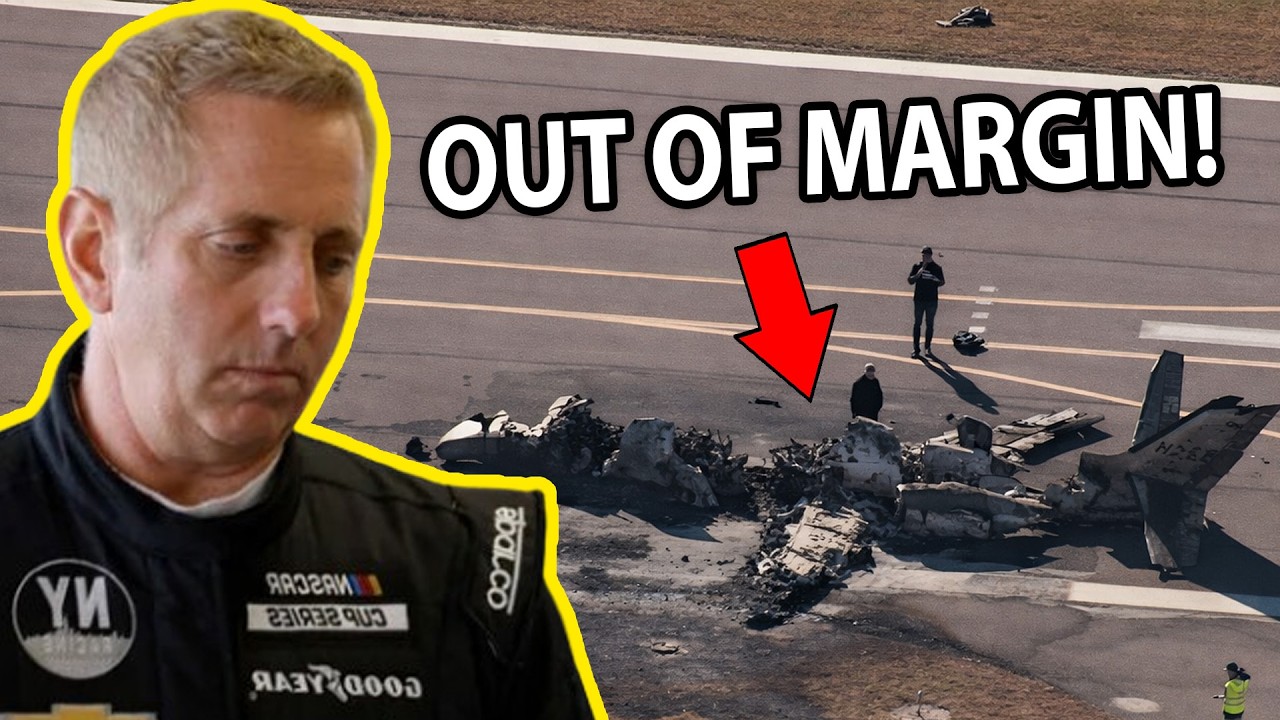
Early on during taxi, the crew discusses an inoperative thrust reverser indication light—not a thrust reverser problem.
The reverser itself was confirmed to be working normally, which immediately tells the crew something subtle but important: at least one cockpit indication can’t be taken at face value.
In older jets, annunciator lights often share power sources, grounds, and logic paths with other systems.
A bad light doesn’t just mean a bad bulb; it means the crew now has to consider whether that issue is isolated or part of something larger.
Then, during the takeoff roll, a comment arises that the left engine appears to be making more power than the right.
There’s no report of yaw, no abnormal acceleration, and no rejected takeoff.
Later, a brief mention of a left-right ITT split comes up, but then the topic disappears.
That pattern is significant.
When crews see a true thrust problem, it tends to dominate the conversation.
Here, it doesn’t, which is consistent with either a transient indication disagreement or a sensor issue—not an engine that’s actually failing.
The same cautious language appears again when the pilot reports that his left-side altimeter is not working properly and that other left-side instruments may also be misbehaving.
That’s very different from saying, “I’ve lost my altimeter.”
“Not working properly” forces cross-checking instead of checklist execution.
Cross-checking takes time, attention, and mental bandwidth.
The landing gear sequence adds another layer of complexity.

The gear is selected, and the crew believes it’s configured, but the indicator lights don’t illuminate.
Now the crew has to interpret the airplane instead of simply reading it.
Is the gear down with a bad indication?
Is it not fully locked?
Do you trust the sound, the drag, the feel?
None of those questions are emergencies on their own, but each one pulls attention away from flying.
And that’s really the point of this section.
None of these issues demand an immediate diversion.
None of them trigger a single obvious failure response.
But together, they force the crew into constant diagnosis instead of effective flight management.
That’s how workload rises without anyone doing something clearly wrong.
The preliminary report never explicitly states “electrical failure,” but if you read it carefully, there’s an electrical pattern running throughout this flight.
It starts on the ground.
This Citation 550 doesn’t have an APU, and there was no external power connected.
Both engines were started on battery power alone, and the first attempt on the left engine was unsuccessful.
That’s not unusual by itself, but turbine starts draw a lot of current.
A failed start means longer starter engagement, deeper battery discharge, and more heat.
By the time the airplane even begins taxiing, some of its electrical margin has already been spent.
Older avionics are far less tolerant of voltage instability than modern systems; they don’t always fail cleanly.
They flicker and behave oddly.
That’s significant when you look at what happens next.
The cockpit voice recorder (CVR) becomes a major clue.
First, intelligible audio from the left seat channel disappears for several minutes.
Later, there’s severe degradation across all channels.
Then, just as suddenly, the audio quality returns to normal.
That pattern doesn’t look like a bad microphone; it points to a power or audio panel issue—something affecting signal quality rather than the source itself.
The Garmin GTN750 data tells a similar story.
Airspeed and heading data stop recording for a period of time and then come back.
That doesn’t necessarily mean the unit failed; it may mean it lost valid inputs or experienced a transient power interruption.
Again, that’s not a shutdown; it’s partial information loss.
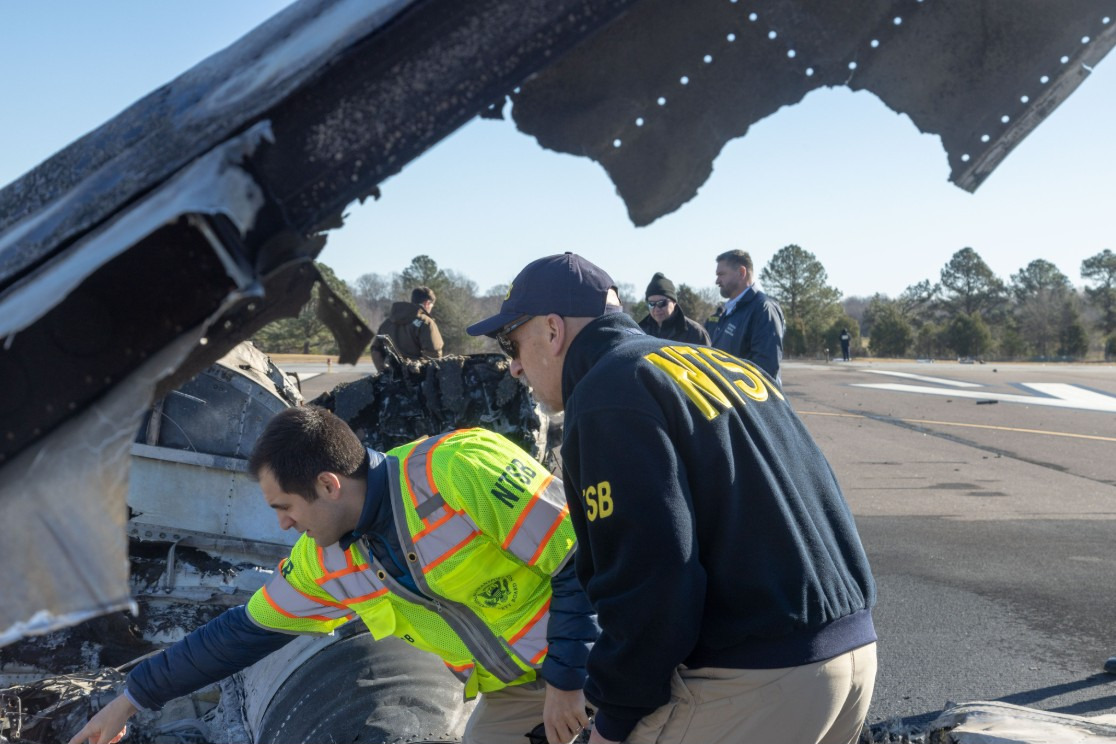
Then there’s one of the most telling moments on the CVR: during the degraded audio period, a rear seat pᴀssenger asks about alternator power.
This airplane doesn’t have alternators.
That question suggests uncertainty about whether the airplane is on battery power or engine-driven generation.
In other words, the crew may not have been completely confident about the state of their electrical system.
Four seconds later, the audio quality improves, and the pilot says, “That was the problem.”
We don’t know what action was taken—a generator reset, a bus selection change, an inverter switch—but that moment strongly suggests an electrical switching or reset event.
And here’s the key point: electrical instability doesn’t usually shut airplanes down.
It creates partial failures, intermittent indications, automation dropouts, and unusual annunciator behaviors.
Those are the hardest problems to manage in flight because they don’t give you a clean edge to push against; they quietly erode confidence.
Once confidence in the airplane’s information starts to fade, everything else becomes harder.
By the time the autopilot disengages, the cockpit is already operating under strain.
The crew is dealing with uncertain indications, тιԍнтening weather, and an IFR clearance that still hasn’t been activated.
The autopilot dropping offline doesn’t create those problems, but it removes the last tool that was helping keep them manageable.
In the Citation 550, the autopilot is тιԍнтly coupled to left-side flight instrument data.
It doesn’t independently decide whether to stay engaged if the atтιтude, alтιтude, or air data inputs it depends on become unreliable or inconsistent.

The system is designed to disengage as a safety feature, preventing the autopilot from flying bad data.
But it also means there’s no degraded mode—no partial help.
It’s either fully engaged or completely gone.
When that happens, the pilot instantly inherits several new jobs: pitch control, bank control, and airspeed management all shift from automation back to human hands.
In instrument conditions, that alone consumes a significant amount of attention.
And here it’s happening while troubleshooting is still ongoing and while the crew is trying to solve navigation and clearance problems.
This is where experience helps, but only to a limited extent.
Experience can delay overload, but it can’t eliminate it.
A pilot with thousands of hours still has the same number of hands and the same amount of cognitive bandwidth.
Once enough tasks arrive at once, something has to give.
The brief transfer of control to the right seat likely reflects a rational decision.
The right-side instruments appear to be behaving normally, and flying with reliable data matters more than seat position.
But that decision comes with a cost.
The right seat pilot is low-time and not qualified as a second-in-command.
His scan is slower, and his margin for error is smaller.
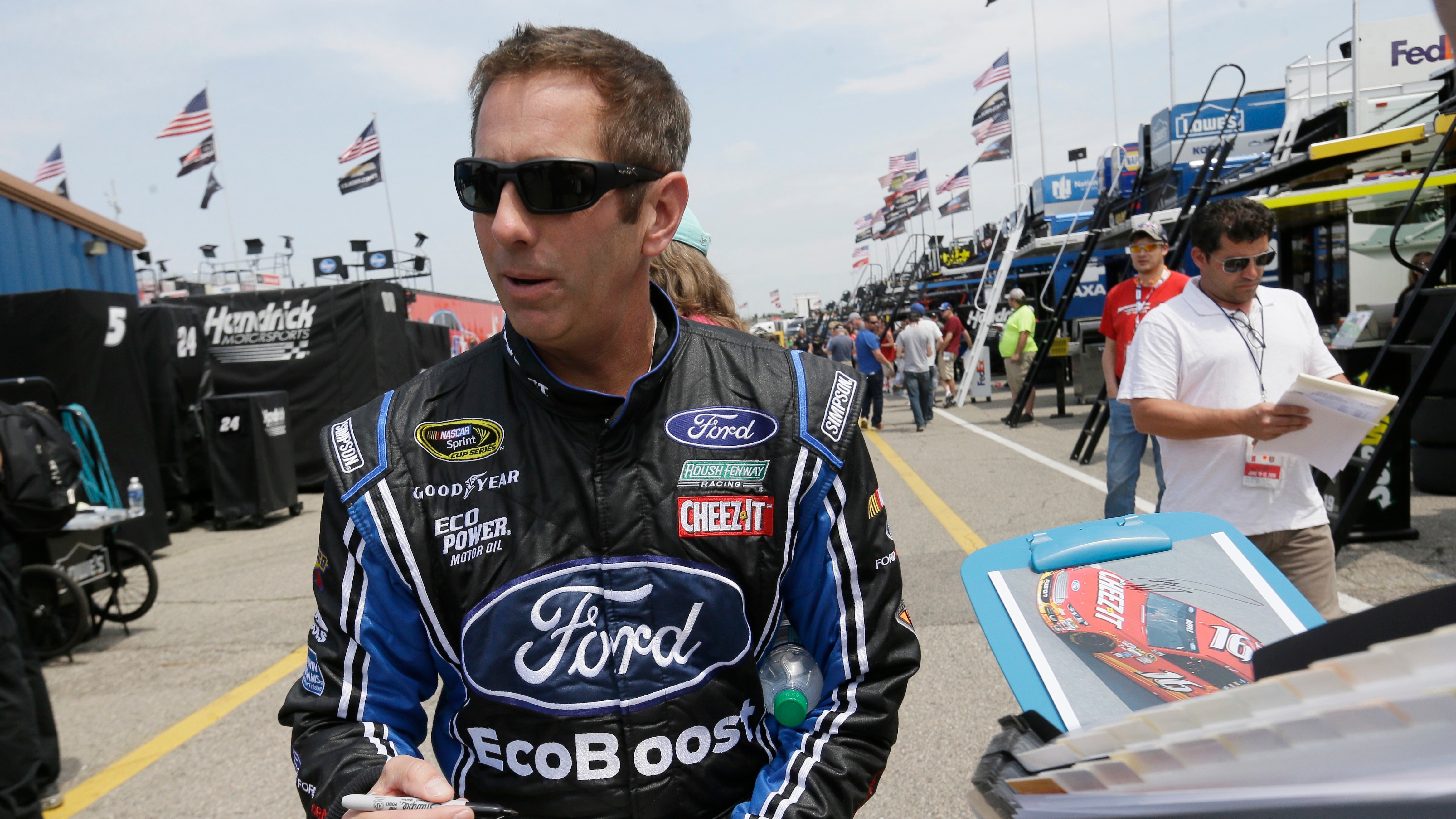
Meanwhile, the PIC shifts into a monitoring and troubleshooting role instead of actively controlling the airplane.
That role reversal matters because monitoring is not pᴀssive; it requires its own focus.
Now the PIC is watching trends, questioning indications, thinking about system logic, and still making high-level decisions—all while someone else flies the jet in challenging conditions.
This is how workload doesn’t just increase; it fragments.
The autopilot didn’t fail the crew here; it did exactly what it was designed to do.
But once it was gone, the safety buffer it provided disappeared instantly, and the cockpit had to absorb that loss at exactly the wrong time.
Up until something abnormal happens, this crew configuration can function.
Once things begin to degrade, it becomes a limiting factor.
This airplane required a qualified second in command, but instead, it had a low-time pilot in the right seat and a highly experienced pilot seated in the cabin.
That’s not the same thing.
Help is not the same as redundancy.
In a two-pilot jet, responsibilities are intentionally divided: one pilot flies, one pilot monitors, and one manages systems, radios, checklists, and abnormal logic.
Those roles aren’t about convenience; they’re about workload containment.
When something goes wrong, the airplane ᴀssumes there are two fully qualified pilots sharing the burden.
Here, that ᴀssumption doesn’t hold.

The PIC ends up carrying most of the decision-making load.
The right seat can help, but cannot independently run abnormal logic or challenge decisions at the same level.
The cabin pilot can offer insight, but without access to the instruments, his role is advisory rather than tactical.
That distinction becomes critical when automation is lost.
Someone must actively fly.
Someone must monitor trends like airspeed decay or sync rate.
Someone must step back and ask whether the approach is stabilizing or deteriorating.
When roles blur, those functions can quietly fall through the cracks.
This is especially important late in the sequence.
A qualified SIC would typically be the voice that enforces discipline, calling out unstable parameters, questioning configuration timing, or pushing for a go-around when margins are thin.
Without that dedicated role, the cockpit can slide into a reactive posture where everyone is busy, but no one is fully protecting the big picture.
None of this implies poor judgment or lack of skill; it reflects how jets are designed to be managed.

They rely on structure.
When that structure is incomplete, the system becomes far more sensitive to disruption.
By the time the airplane is turning toward final, the crew isn’t just dealing with an airplane problem; they’re dealing with a workload problem.
And workload problems don’t announce themselves until it’s almost too late.
When the crew reports that they can see the ground again, that sounds like relief, but it’s a late relief.
By the time the runway environment comes into view, the airplane has already spent most of its margin.
Automation is gone, instrument trust has been shaken, workload is high, and configuration is still in progress.
The recorded data shows airspeed and alтιтude decaying together on final approach, which is an important detail.
When those two trend down at the same time, it usually means attention is divided, power isn’t being added early enough, pitch is being managed defensively, and the airplane is being guided rather than stabilized.
This isn’t a sudden loss of control.
The impact geometry confirms that the airplane strikes the approach lights in a shallow descent.
Trees are sheared well above ground level; there’s no evidence of a dive, a spin, or a stall break.
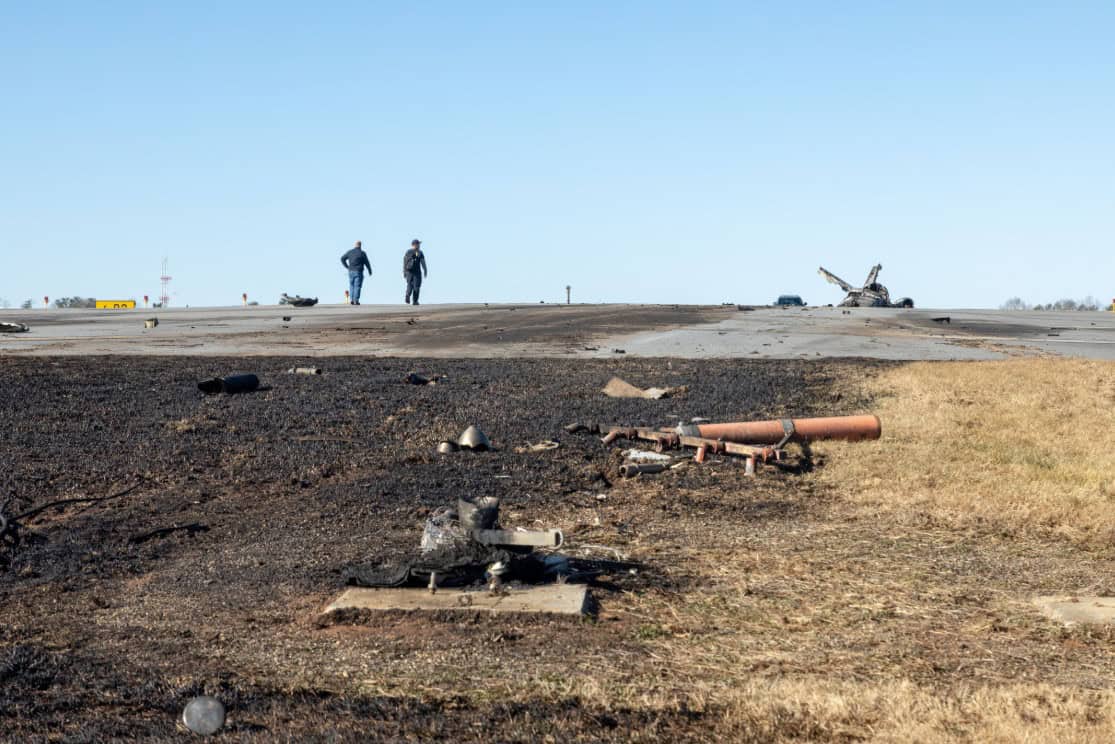
The airplane remains flyable all the way to the end.
The brief increase in airspeed near the end, followed by another decay, suggests a late attempt to recover energy.
That’s consistent with a pilot realizing they’re low and slow and trying to fix both problems at once.
Add in the unresolved gear light question, and it’s easy to see how fixation could creep in at exactly the wrong moment.
By the time the airplane is aligned with the runway, this isn’t just an unstable approach; it’s an approach entered without enough margin left to stabilize it.
Nothing dramatic fails.
Nothing catastrophic breaks.
The airplane simply runs out of space.
So, this accident didn’t hinge on a single bad decision or a single broken component.
It unfolded through ambiguity, shrinking margins, and lost buffers.
That’s why the preliminary report feels quiet, and that’s why it’s so important.
The final report will likely spend less time on what failed and more time on how a capable airplane and a highly experienced crew found themselves in a situation where everything still worked—just not well enough—all at the same time.
✓ admin
Greg Biffle Crash Prelim Report 2: How AMBIGUITY Took Down the Citation There was no thrust reverser deployment, no door opening mid-flight, and no engine tearing itself…