
Pamela Cisneros Seemed “Fine” Days Before Times Square Attack — Then Her Family Learned She May Have Stopped Treatment
“SHE WAS FINE” — THEN CAME THE SHOCKING TURN.
Pamela Cisneros had been receiving regular mental-health treatment and showed no signs of aggression, her family says.
But her brother has now revealed one disturbing detail about her medication that could change how people view the days leading up to Times Square.
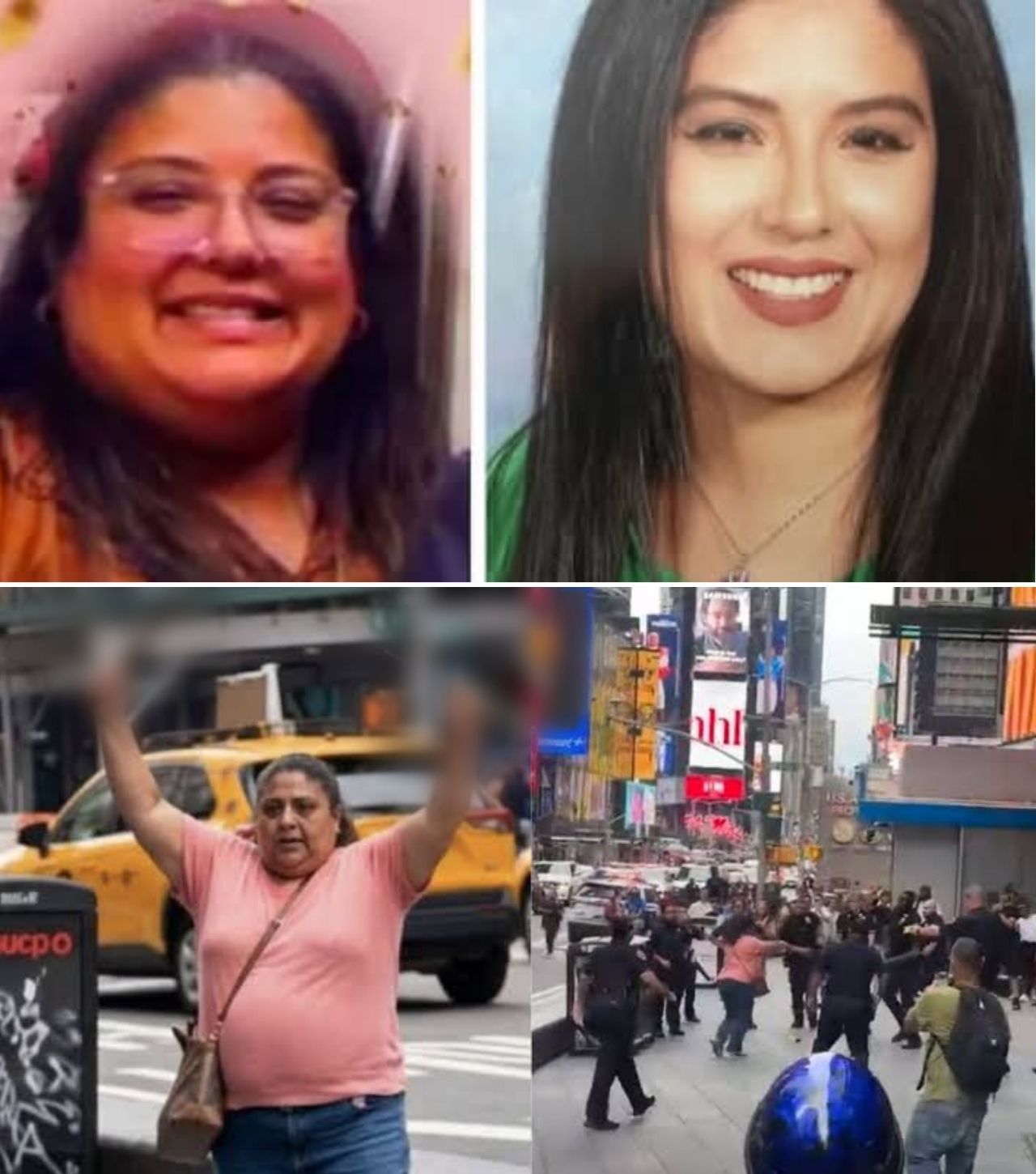
Pamela Cisneros Seemed “Fine” Days Before Times Square Attack — Then Her Family Learned She May Have Stopped Treatment
Pamela Cisneros’ family is now confronting one of the most difficult questions surrounding the Times Square tragedy: What changed?
The 49-year-old Queens woman had reportedly struggled with serious mental-health problems for years and had received ongoing treatment, including regular medication injections. Yet according to her brother, Patrick Peralta, she had recently appeared stable and showed no obvious signs that she would become violent.
Then came the shocking events of Aug. 31.
Cisneros allegedly attacked two strangers near Times Square, killing 32-year-old Bank of America executive Erin Piacenti and seriously injuring 68-year-old Tak Kam. Police later confronted Cisneros while she was carrying two knives. After repeated commands to drop the weapons and unsuccessful attempts to subdue her with Tasers, officers opened fire when she allegedly advanced toward them.
Cisneros later died at Bellevue Hospital.
Now, her family’s account of her mental-health history is adding another layer to a tragedy that has already sparked a national discussion about psychiatric treatment, crisis intervention and the challenges facing families of people with serious mental-health conditions.
Her brother says there were no warning signs
Peralta has described his sister as someone who had experienced significant mental-health difficulties but had not previously displayed the kind of aggression seen during the Times Square incident.
“She never showed any aggressiveness or being violent,” Peralta told the New York Post, according to multiple reports. “I don’t know what happened.”
That apparent contradiction has left the family struggling to understand what happened.
Peralta said he believed Cisneros had bipolar disorder, although he acknowledged that he was not certain about the full diagnosis. He said she had been receiving monthly injections as part of her treatment and that medication had helped provide a degree of stability.
Her father, Mario Cisneros, separately told The New York Times that the family had been taking her to monthly appointments after a serious mental-health crisis years earlier. He believed the treatment had helped her regain stability.
That makes the events of the past several months particularly significant.
The troubling question about her medication
Peralta has suggested that Cisneros may have stopped receiving her regular medication injections before the attack.
“I think maybe she stopped the injection she was getting,” he said, according to reports, speculating that this could have contributed to the dramatic change in her behavior.
But that remains a family member’s theory, not an established fact.
There has been no public confirmation that stopping medication caused the Times Square attack, and there is no basis for ᴀssuming that a mental-health condition itself explains violent behavior.
The distinction is important because mental illness is not synonymous with violence. Most people living with mental-health conditions do not become violent, and reducing a complicated incident to a diagnosis risks overlooking other factors that investigators may eventually uncover.
What the family account does establish is that Cisneros had a long history of psychiatric difficulties and that treatment had apparently played an important role in her life.
Her father told The New York Times that in April she declined his offer to take her to a regular mental-health appointment, telling him she could go herself and that he should not worry. It remains unclear what happened with her treatment afterward.
“I’m fine” — just days before the tragedy
Perhaps the most haunting detail for her family is how normal everything seemed shortly before the attack.
Peralta said Cisneros had regularly visited their mother but had stopped coming over during the week before the incident.
The family called her.
According to Peralta, she told them she was “fine” on Saturday.
Two days later, she was involved in the Times Square attack.
That narrow timeline has inevitably prompted questions about whether something changed between Saturday and Monday.
At this point, however, investigators have not publicly identified a specific trigger.
A history that stretched back years
Cisneros’ mental-health struggles were not new.
According to family accounts and reporting, she experienced a serious crisis in 2019 when she attempted suicide by jumping in front of a subway train in Queens. Her family subsequently became heavily involved in helping her obtain treatment.
Her father believed the monthly treatment had made a difference.
The New York Times reported that he thought his daughter had finally “turned a corner” after years of difficulties.
That belief makes her family’s reaction to the Times Square attack particularly painful.
They were not describing someone they believed had been spiraling uncontrollably for months.
They were describing a woman who, from their perspective, appeared to have found a measure of stability.
The tragedy that unfolded in minutes
Police say Cisneros first attacked Kam near West 41st Street and Seventh Avenue.
She then allegedly attacked Piacenti.
Officers located Cisneros shortly afterward. According to the New York Attorney General’s Office of Special Investigation, she was holding a knife in each hand when officers encountered her around 4:26 p.m.
Three officers attempted to use Tasers, but they appeared to have no effect.
Cisneros allegedly continued moving toward officers while holding the knives, prompting two officers to fire their weapons. She was transported to Bellevue Hospital, where she died.
The Attorney General’s Office has opened an investigation into the police-involved shooting. Officials have stressed that the initial account is preliminary and could change as investigators examine additional evidence.
The attack itself is also being investigated, although authorities have said there is no indication that it was terrorism-related.
Erin Piacenti’s family is facing an entirely different loss
Any discussion of Cisneros’ mental-health history must also be weighed against the devastating consequences for the people she allegedly attacked.
Piacenti, 32, was a Bank of America executive and a new mother. Reports said she had recently returned to work following maternity leave.
Her death has generated an outpouring of grief from colleagues, friends and members of the public.
For many people following the case, that creates a difficult tension.
There is sympathy for a family that says a loved one suffered from serious mental-health problems.
But there is also profound sympathy for Piacenti, whose life was cut short in a completely random encounter.
Understanding what may have happened to Cisneros does not diminish what happened to Piacenti.
Why the medication question matters
The medication issue is nevertheless important because it highlights one of the central problems facing families dealing with serious mental illness: continuity of treatment.
Medication can be an important part of treatment for some psychiatric conditions, but treatment decisions are individualized. Whether a particular person should start, stop or change medication is a medical decision that depends on the diagnosis, medication and circumstances.
In Cisneros’ case, the public does not yet know whether she stopped treatment, why she might have stopped, whether doctors were aware, or whether any change in treatment had anything to do with the events in Times Square.
Those questions may never have simple answers.
But her family’s account illustrates the difficult position relatives can find themselves in.
They may recognize that something is wrong.
They may want to help.
Yet an adult who is not under a legal intervention may have significant control over whether they attend appointments or receive treatment.
That gap can become particularly dangerous when someone’s condition deteriorates rapidly.
A broader debate about America’s mental-health system
The Cisneros case has therefore become part of a much larger conversation.
Across the United States, families, doctors, advocates and law-enforcement officials have debated how society should respond when someone appears to be experiencing a serious psychiatric crisis.
Should police be the first responders?
Should there be more specialized crisis teams?
How easily should families be able to obtain emergency psychiatric intervention?
What happens after a person leaves an emergency department?
And perhaps most importantly, how can treatment remain consistent after a person appears to have stabilized?
There is no single answer.
But the Cisneros timeline demonstrates why the debate continues.
A person can appear stable to family members and neighbors while experiencing problems that are not immediately visible.
That does not mean a tragedy is inevitable.
It means warning signs can be difficult to recognize.
The question nobody in the family can answer
For Cisneros’ relatives, the most painful part may be that there was no obvious warning.
Her brother said she appeared fine.
Her father believed treatment had helped.
Her family had apparently continued trying to support her.
And yet, within days, everything changed.
Whether medication played any role remains unknown.
Whether another intervention could have prevented the Times Square attack is also unknown.
What is known is that three families were affected by a terrifying chain of events: Piacenti lost her life, Kam survived a serious attack, and Cisneros died after the confrontation with police.
The investigation will determine more about what happened in those final moments.
But the questions surrounding the months and years before Times Square may prove just as important.
How did someone who appeared stable to the people closest to her reach such a devastating breaking point — and could the system have intervened before it was too late?
For now, there are more questions than answers.