💔 DOLLY PARTON’S SISTER STELLA BREAKS HER SILENCE — The Kenny Rogers Story Fans Never Knew
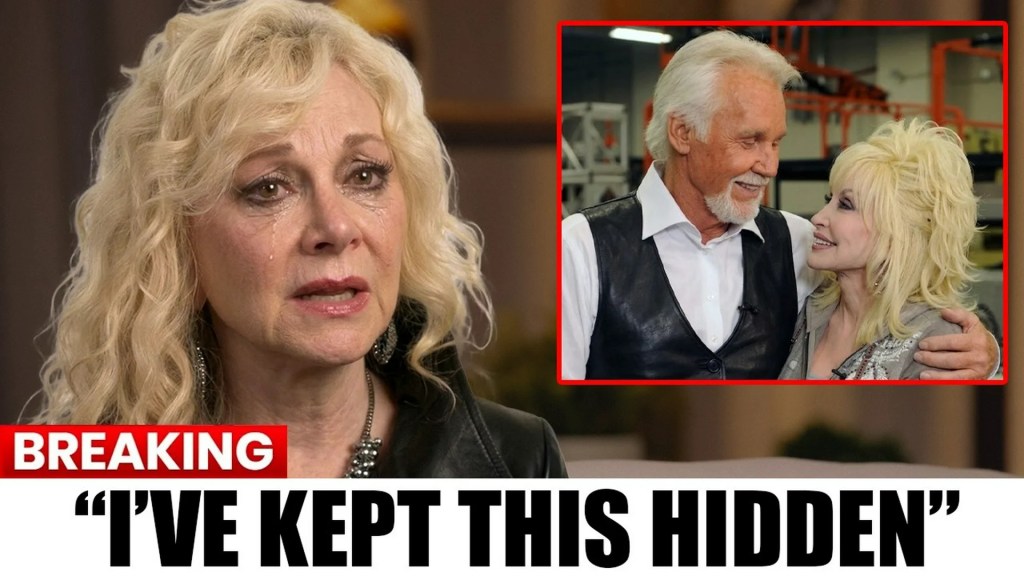
Three Days After Dolly Died, Her Sister Dropped a Bombshell: She Wanted to Run Away With Kenny Rogers
Dolly Parton was once a cherished part of the youth of countless generations.
Her voice, timeless songs and familiar radio and television programs made her name a memory that seemed almost impossible to replace.
But behind that radiant smile and glittering fame, the Parton family kept stories that the public rarely ever heard.
Then, just three days after Dolly pᴀssed away, her sister Stella Parton unexpectedly posted a brief message on social media.
It was not long-winded, nor did it avoid the issue.
Yet every word immediately set public opinion abuzz — in particular following the heartfelt tributes that Kenny Rogers’ family paid to Dolly.
Stella gave a surprising response.
She candidly said that Dolly truly had special feelings for Kenny and had even once intended to run away with him.
But that still was not what sent chills down people’s spines.
Stella also revealed that she had known about Dolly’s health condition beforehand and had even given her sister advice during her final days.
So what really happened behind the scenes during the last days of Dolly’s life?
And what exactly was Stella’s brief message?
To understand that story, we have to go back long before Stella’s Facebook posts became a place where people searched for clues.
Stella May Parton was born on May 4, 1949, in Sevierville, Tennessee.
She was the sixth of 12 children born to Robert Lee Parton Sr. and Avie Lee Parton, and she was three years younger than Dolly.
They grew up in a small house, constantly short of money and with almost no private space, with 12 children sharing food, clothes and their parents’ attention.
Stella quickly learned that if she wanted to be heard, she had to speak up.
From an early age, Stella and Dolly performed together on stage.
At the age of seven, Stella appeared on a local television program in Knoxville.
Two years later, she was already appearing on the radio.
Along with her sisters Willadeene and Cᴀssie, Stella formed a small musical group singing gospel music and recording commercials throughout the region.
For the Parton family, music was not a luxury. It was a way of life.
As she grew older, Stella began writing her own songs.
But just before graduating from high school in 1966, she married Marvin Carol Rauhuff and later had a son.
Although music was no longer her top priority, Stella never gave it up.
In 1967, she recorded her first gospel album, In the Garden, with her mother, Avie Lee, and her two sisters.
After that, Stella left Tennessee for Washington, D.C., where she performed at Hillbilly Heaven and gradually built her own path, determined not to be known forever simply as Dolly Parton’s sister.
In 1975, Stella bet on herself by founding the record label Soul, Country and Blues and releasing the album I Want to Hold You in My Dreams Tonight.
The тιтle track unexpectedly climbed into the Top 10 of the country charts, reaching No. 9, which brought her attention and led to her signing with Elektra the following year.
By then, Stella had proven that she could stand on stage on the strength of her own talent and name, rather than simply living in the shadow of her famous sister.
But the most notable song Stella recorded in 1975 was not the one that put her on the charts.
It was “Ode to Olivia,” a song she wrote in defense of Olivia Newton-John when the Australian singer faced opposition from part of the American country music community at a time when many people believed Olivia did not deserve to receive country music awards.
Stella, then only 26 years old and not yet a major name herself, still stood by her, despite not being asked to do so and receiving nothing in return.
She simply did what she believed was right, and that instinct seemed to stay with Stella for nearly half a century afterward.
Her years with Elektra subsequently proved that Stella could stand on her own name.
From 1977 to 1978, she had three songs reach the Top 20 on the country charts: “The Danger of a Stranger,” “Standard Lie Number One” and “Four Little Letters.”
“The Danger of a Stranger” even reached the Top 40 in the United Kingdom in 1979.
She continued to draw attention with “Steady as the Rain,” a song written by Dolly Parton herself, before leaving Elektra in 1980 after three albums.
Those achievements showed that Stella had never relied solely on the Parton name to survive in the music industry.
Over a career spanning roughly five decades, depending on how they are counted, Stella released around 17 to 23 albums and had more than two dozen singles appear on the charts.
She also tried her hand at stage work and acting, appearing in The Best Little Whorehouse in Texas, Seven Brides for Seven Brothers and The Dukes of Hazzard, and recording a song for Rhinestone, the film starring Dolly.
Many years later, Stella appeared in Dolly Parton’s Coat of Many Colors, a film about the Parton family’s childhood — this time in a story that almost retold the very experiences she herself had lived through.
Yet, despite having a career of her own, Stella was still often introduced simply as Dolly Parton’s sister.
For her that could open doors. But it also created an enormous shadow. Stella chose not to resent that shadow.
Instead, she chose to step out of it.
Even after her peak years had pᴀssed, she continued recording, releasing new material and working with Raptor Records, while at the same time speaking out about poverty, domestic violence and the social issues she had witnessed firsthand.
Those contributions brought Stella considerable recognition, including being named an honorary ambᴀssador of country music in New Zealand and receiving honors in Kentucky, Louisiana and Pennsylvania.
In 2004, she was also named Female Vocalist of the Year by the Christian Country Music ᴀssociation.
What may have made Stella stand out was not her awards or тιтles, but her blunt honesty.
She was willing to speak openly about the way the music industry treated women, speak out about politics and push back against anything she believed was wrong, even when doing so made her own audience unhappy.
For that reason, throughout the decades, she has always been ready to speak her mind, including about her relationship with her sister Dolly, even when others found it uncomfortable.
And perhaps no one expected that after Dolly pᴀssed away, what Stella unexpectedly brought up was not only the final years of her sister’s life, but a relationship that had once made all of Hollywood curious: Dolly Parton and Kenny Rogers.
After Dolly pᴀssed away, Stella delivered remarks for her sister.
But what was particularly notable was that in those emotional comments she mentioned Kenny Rogers.
The friendship between Dolly Parton and Kenny Rogers began with a fateful encounter in the 1970s.
Dolly Parton had known of Kenny Rogers since his days singing with the First Edition, and she was especially drawn to his deep, warm, masculine and distinctive voice in the song “I Just Dropped In (To See What Condition My Condition Was In).”
It was not until 1976 that they officially met, when Parton appeared as a guest on Rogers’ television show.
After just a few minutes of talking, both of them sensed a strange connection, a friendship that began to take root from those very first feelings of attraction.
However, the true stroke of fate that brought them together as a legendary duo came in 1983 with “Islands in the Stream,” written by Barry Gibb of the Bee Gees.
Initially, Kenny Rogers intended to record the song as a solo, but he spent four full days trying to record it and still could not breathe life into it because he felt that the melody was missing something — a feminine element.
At that very moment Dolly Parton happened to be in the studio downstairs and was invited by Barry to come up and try singing it.
Then something magical happened.
From the very first notes she sang, the entire room seemed to light up, and Rogers later admitted that the song was never the same again.
They sang together with an almost unbelievable degree of harmony, as though their voices had been born for one another, and “Islands in the Stream” became one of the greatest hits of all time, while also marking the beginning of a close friendship that would last for the rest of their lives.
What made their relationship so special and gave it such rare beauty was the fact that they always flirted with each other in a playful and captivating way in public, yet never allowed themselves to cross the boundaries of friendship.
Kenny Rogers once openly admitted that it was precisely that refusal to cross the line that gave their relationship its intense and enduring appeal, because he believed that if they ever went further, they would lose something sacred and simple that had always existed between them.
Meanwhile, Dolly Parton also often shared that she had always felt a profound love and a deep spiritual connection with Kenny, but she never allowed those feelings to go too far, because they both deeply respected each other’s marriages and families.
Parton had been with her husband, Carl Thomas Dean, for decades, while Rogers was also married to Marianne Gordon at the time, and that mutual respect laid a strong foundation for a pure relationship in which they could love each other as kindred spirits without becoming entangled in anything else.
Their closeness went far beyond recording sessions and performances.
It was also built through thousands of warm everyday moments as they toured across the United States together.
Parton recalled that when they first began touring together, they had so much time to eat, talk and joke around with the entire crew that everyone felt as though they were living as one big family, and she always thought of Kenny as the brother she had never had.
Kenny Rogers once admitted that whenever he walked into a room and saw Dolly, he always felt as though he had seen her only yesterday, because their conversations always flowed so naturally and were filled with joy, as if time itself had no power to change that special connection.
During long trips they would often sit together and sing their favorite songs to each other.
Parton would frequently tease Kenny about his rugged appearance and his marriages, while he delighted in responding with jokes about her hair and her glamorous style of dress.
One of their most famous running jokes was that Parton would often pinch Kenny Rogers’ backside whenever she had the chance — an impish and intimate gesture that would make them both burst into laughter like children.
Rogers admitted that he was not bothered by it at all, because that was simply Parton’s way of expressing her affection for him and how comfortable she felt around him, and he also enjoyed their charming public flirtations.
Parton, meanwhile, insisted that she loved Kenny’s voice so much that she never grew tired of listening to him sing.
Whenever they sang together, she felt a magical current flow through her, making her heart beat with happiness.
They showered each other with glowing praise, both for their musical abilities and for who they were as people.
Kenny Rogers always described Dolly as a wonderful woman with unwavering determination, an optimistic spirit and a kind heart, a woman who could light up any room with nothing more than her smile.
As age began to leave its mark on every step they took and every note they sang, their friendship grew even deeper, and that was clearly reflected in the final song they recorded together, “You Can’t Make Old Friends.”
It was a deeply moving ballad about the bond between old friends, in which they asked each other what life would be like if one of them had to leave.
When Parton heard the demo for the first time, she could not hold back her tears because it felt so much like the story of the two of them.
Kenny Rogers also admitted that the song made him emotional, because every lyric seemed to portray the friendship they had nurtured through so many years, a friendship that no amount of money or fame could ever buy.
They performed the song together on stage with complete sincerity and overflowing affection, and audiences around the world could feel that sacred bond, because the way they looked at each other and the smiles they exchanged said everything that words could never express.
When Kenny Rogers pᴀssed away in 2020, the entire music world was shocked and heartbroken.
But perhaps no one was in more pain than Dolly Parton, who had lost half of her soul.
In a tearful message, she wrote that she loved Kenny with all her heart and that her heart was broken when she received the devastating news because a very large part of her had left with him that day.
She remembered their endless phone calls, their long conversations about music and life, and admitted that his absence had left a void so vast that nothing could ever fill it.
Conversely, when Dolly Parton pᴀssed away in 2026, Kenny Rogers’ family wrote a deeply emotional letter to her.
In that letter, they wrote: “Our dear Dolly, our hearts are broken to hear that you have gone.
Kenny always said that you were one of the most special people he had ever met, and we know he is somewhere in heaven, smiling and waiting to welcome you with open arms.”
Those words seemed to affirm that their relationship was not limited to just the two of them, but had become a sacred part of the memories of both families.
They recalled that Kenny had once confided in his loved ones that Dolly was not merely his performing partner nor simply the playful woman he flirted with on stage, but one of the most wonderful women he had ever had the privilege of calling a friend.
The family said that whenever Kenny spoke about Dolly, his eyes would light up with an indescribable joy, as though she had always been an endless source of positive energy in his life, and his voice would grow warmer whenever he shared memories of the time they had spent together.
They also shared that, although Kenny could not be there to say goodbye, he had left behind countless stories about Dolly, stories they treasured and retold as a way of keeping the warmth of that friendship alive.
The family recalled that Kenny often spoke about the nights they spent sitting together on the tour bus, singing old songs to each other and laughing until they cried over the smallest, most ordinary stories, and he would always end by saying: “There is no one in this world who makes me laugh as much as Dolly.”
They wrote in the letter: “You brought Kenny a joy that no one else could, and we are grateful to you for that — for giving him such wonderful years, for giving him a friend he could trust and love without having to keep his distance.”
In the final lines of the letter, Kenny Rogers’ family whispered a tearful farewell.
“Thank you, dear Dolly, for everything you did for Kenny, for what you did for music and for what you did for this world.
Please take Kenny’s hand and sing him a new song, because we know he misses you dearly and misses the way your voices blended together.”
They concluded with a promise: to always keep Dolly’s memory in their hearts as an inseparable part of their family story, because that friendship had transcended both life and death, becoming an endless love song about kindred spirits and affection.
And perhaps somewhere in heaven, Kenny Rogers is smiling, opening his arms to welcome the closest friend of his life with the words he had teased her with so many times: “You’re late, but that’s all right.
I’ve always been waiting for you.”
Amid the tearful tributes from Kenny Rogers’ family, another voice also emerged — one filled with emotion and offering a glimpse into the deepest, most hidden corners of Dolly Parton’s feelings for her kindred spirit and friend.
That voice belonged to Stella Parton, Dolly’s sister, one of the people who understood the stirrings of Dolly’s heart better than almost anyone else.
Stella could not remain silent in the face of the farewell Kenny’s family had sent to her sister, because she knew that the bond between Dolly and Kenny ran deeper than anything the press or the public had ever known.
She sat down and wrote a heartfelt letter, a belated but honest confession addressed to Kenny and his family, and also a way of revealing the things Dolly had never fully spoken about herself.
Stella wrote that she had watched her sister go through many relationships, from friendships and professional partnerships to fleeting romances, but she had never seen Dolly love anyone as deeply and as uniquely as she loved Kenny Rogers.
“Dolly had never loved anyone that way, and I know it because I saw her eyes light up whenever Kenny called.
Whenever she mentioned his name,” Stella shared.
In the letter she emphasized that Carl Dean, the husband who had been by Dolly’s side for more than half a century, was her life partner, the quiet, steady and safe anchor in her private life.
But Kenny Rogers was her true kindred spirit, the person who could reach the deepest layers of her soul without needing any explanation.
Stella recalled one late night, after an exhausting tour, when Dolly sat beside her in a warm living room and whispered something Stella would never forget.
Dolly said that sometimes she simply wanted to escape from everything — from the stage lights, from responsibility, from the rumors — and take Kenny Rogers with her to a place where there would be only the two of them, where they could simply be themselves and no longer have to maintain any distance or boundaries.
“Have you ever thought about leaving everything behind and running away with Kenny?”
Stella recalled asking her sister that question that night.
And Dolly gave a mysterious smile, her eyes sparkling yet filled with sadness.
She replied: “Sometimes he still calls me and tells me we should go somewhere, and all I want to do is say yes.
I don’t want to ask where. I don’t need to know. I just want to be with him.”
But then Dolly shook her head and said that her morals, her faith and the promises of marriage would not allow her to do such a thing, and that she had always chosen to preserve their friendship in the purest and most complete way possible.
Stella wrote in her heartfelt letter that her sister had lived with those sweet but unfulfilled emotions for three decades and that this was perhaps one of the greatest sacrifices Dolly had silently carried.
Dolly loved Kenny in a way that only great souls can love — a love that required no possession, no physical intimacy, but only presence and understanding.
Stella recalled that Dolly had once confided in her that she often wondered what her life might have been like if she had chosen differently, but she also comforted herself with the thought that she and Kenny had shared moments of fulfillment on stage and that the looks and smiles they exchanged had replaced everything they could never have.
Stella shared that it was precisely because of those boundaries that their friendship had become more sacred and enduring than any romantic relationship, and that was something Dolly cherished until the final moment of her life.
Stella’s heartfelt letter ended with tearful words.
She wrote that she felt grateful that her sister and Kenny Rogers had finally been reunited in another world where the bonds and limitations of earthly life no longer existed.
“Now the two of you can laugh, you can sing and you can be together forever without having to worry about anything.
Kenny, wait for Dolly there and smile at her because she has traveled a very long road to reach you.”
Stella also thanked Kenny Rogers’ family for loving her sister and for sharing such heartfelt tributes.
She said that now, with both of them at rest, the stories and anecdotes about them would continue to live on like an endless love song about friendship, sacrifice and the most beautiful kind of love that human beings can give to one another.
There was one thing people did not know.
Stella was actually one of the first people to realize that something was wrong, even before the public truly began to notice.
Let us go back to March 2025, when Carl Dean, the husband who had been by Dolly’s side for nearly 60 years, pᴀssed away at the age of 82.
Dolly met Carl when she was just 18 years old, on her very first day in Nashville.
While she lived under the spotlight, Carl stayed almost entirely out of the public eye, becoming the part of her private life that Dolly was determined to protect.
After he pᴀssed away, Dolly spent a great deal of time taking care of herself.
After years of putting her husband’s health above everything else, the emptiness left by a marriage that had lasted nearly six decades was a loss that no achievement could ever fill.
That grief was compounded by other losses, as the Parton family, one by one, lost three brothers from the 12 siblings who had grown up together in a small house.
Each loss felt like another piece of their childhood memories being taken away.
Stella went through those losses as well and had spoken openly about her grief.
Perhaps that was why, for roughly the final seven years, she released almost no new music, later describing that period as years of grief and loss.
By the fall of 2025, Dolly was therefore not simply a star approaching her 80th birthday.
She was a woman who had just lost the husband she had shared nearly 60 years with, watched several of her siblings pᴀss away and spent so much of her life caring for others that she had sometimes forgotten to care for herself.
Yet in public, Dolly continued to smile, crack jokes and work.
By late September, she postponed a Las Vegas performance for health reasons, a notable sign that was quickly overlooked.
Then, in early October, Freida Parton unexpectedly posted a prayer for Dolly.
There was no diagnosis and no explanation, but because this was Dolly Parton, the post was quickly shared and interpreted as something serious.
Within hours, social media was even filled with tributes, despite the fact that the family had not confirmed that Dolly was in danger.
A sister’s prayer had turned into rumors of death.
At that very moment, Dolly stepped forward to put the rumors to rest herself.
In a video filmed at a studio, she looked directly into the camera and jokingly said: “I’m not ᴅᴇᴀᴅ yet.”
Millions of people breathed a sigh of relief.
Dolly explained that after Carl’s death she had not taken proper care of herself, so she needed to temporarily scale back her work in order to receive treatment and rest.
Freida later spoke out as well, explaining that she was simply worried about her sister and believed in the power of prayer.
The whole episode seemed to be nothing more than an online misunderstanding.
But over the next 12 months those signs did not disappear.
They simply came more slowly, more subtly and were often hidden behind Dolly’s familiar smile.
In January 2026, she turned 80 and was honored by Tennessee with Dolly Parton Day on January 19, recognizing her contributions to the state’s music, charitable causes and culture.
It was a proud day, but in retrospect it also seemed like a milestone marking the beginning of another chapter in Dolly’s life.
In March, Dolly made an in-person appearance at the opening of Dollywood’s 41st season, her first public appearance of the year.
She was still smiling, still joking and reᴀssuring the audience that she was busy with many projects.
Dolly acknowledged that she had a few minor health issues, was receiving care and needed time to heal after Carl’s pᴀssing.
She even joked that people should not mistake the park’s president for a new boyfriend because she was not dating anyone.
Everything sounded normal.
Yet behind that smile were small admissions that Dolly was no longer quite as healthy as she had once been.
The question worth considering was not whether Stella or Freida knew something in advance, but why the people closest to Dolly seemed to sense that vulnerability before everyone else did.
They did not need a diagnosis.
All they had to do was hear a more tired voice, see a schedule being cancelled or notice that someone who had always been strong had begun talking more often about healing.
And for someone like Dolly, who had spent her entire life making the world believe that she was always fine, perhaps her family members were simply close enough to see what lay behind that smile.
By May 2026, the picture of Dolly’s health had become clearer when she canceled her entire run of performances at Caesars Palace, which had originally been postponed from December 2025 to September 2026.
In a video message to her fans, Dolly said that she had experienced problems with kidney stones, while her immune and digestive systems had been out of balance for years and doctors were helping her body recover.
Although she had to cancel the shows, she continued working and mentioned a Broadway project that was still in development, as if to make it clear that, while her health might force her to slow down, it had never truly made her want to stop.
Also in May, Stella unexpectedly announced that after seven years without releasing new music, she had found her inspiration to write again.
Stella described those silent years as years of grief and loss, but this return carried a message of hope and the strength to keep standing after the people she loved had pᴀssed away one by one.
She spoke candidly about the losses in her family and the changes that had caused her pain, but when advised to stay away from politics, Stella still refused.
After 50 years of not allowing others to decide what she was permitted to say, she was not about to start remaining silent at the age of 77.
Then Stella released a new song тιтled “Stand By Me.”
Looking back, the тιтle alone could not help but make people think — a reminder of standing beside someone during their most difficult moments.
But when the song was released, no one thought it had anything to do with Dolly.
By June, Stella continued speaking about how the Parton family had endured a series of losses, once again mentioning the two things that had helped her survive those years: laughter and a calm acceptance of the things that could not be changed.
If one were to read Stella’s interviews from June 2026, they would seem like nothing more than the words of a woman trying to close the chapter on years of grief, speaking about family, those who had pᴀssed away and the way people learn to move forward after things they cannot change.
But when placed alongside what happened afterward, every word seemed to take on a different meaning, as though Stella had quietly been preparing herself for something she herself did not want to name.
While Stella was finding her inspiration to write again, Dolly was gradually scaling back her public activities.
Then August arrived, just a few days before everything changed forever.
In her final health update, Dolly admitted that she had been through a difficult period and had at times neglected her own health because she had spent most of her time caring for Carl.
But she still insisted that she was recovering and, more importantly, that she was still working.
That particular phrase reᴀssured her fans: as long as she was still working, still making plans, it meant Dolly still had plenty of time ahead of her.
No one wanted to think that a woman who had spent her entire life moving forward might have been so close to her final days.
Then, on Tuesday, August 25, 2026, everything suddenly came to a stop.
Dolly Rebecca Parton Dean pᴀssed away peacefully at her home in Nashville at the age of 80.
The announcement did not come from a spokesperson or through television, but from her nephew, Bryan Seaver.
In a video posted on Dolly’s own social media accounts, Bryan — who had been responsible for Dolly’s security for more than 20 years — revealed that Dolly herself had asked him to record this message years earlier, at a time when no one imagined that day would ever truly come.
In the video, Bryan called it both an honor and a source of profound sorrow.
He said that the sorrow belonged to those who were left behind, because Dolly had lived a meaningful life and opened doors for the entire family, helping them see possibilities they had never before imagined they could achieve.
The family later requested a small private funeral and asked that, instead of sending flowers, people make donations to Dolly Parton’s Imagination Library, a program that has brought books to millions of children.
The final message ended with words that were unmistakably Dolly: she will always love you.
Perhaps sometimes, for someone who spent an entire lifetime saying the things others dared not say, the final silence can hold more than any words ever could.
And when looking back at the entire timeline — the prayers, the reᴀssurances, the canceled performances, Dolly’s admissions about her health and her words that she was still working — one can begin to understand why the signs the Parton sisters had noticed made this story so heartbreaking.
Perhaps what makes the story of Dolly Parton, Stella and Kenny Rogers so haunting is not simply the losses, but the feelings that were never truly expressed in full.
Stella was the sister who always saw Dolly behind the spotlight, while Kenny Rogers was the friend and colleague with whom she shared a special bond.
Amid lives filled with fame and glory, Dolly was still a woman who knew how to love, knew how to be hurt and also had moments of quiet that the public could never see.
✓ Max
Three Days After Dolly Died, Her Sister Dropped a Bombshell: She Wanted to Run Away With Kenny Rogers Dolly Parton was once a cherished part of the…