MISSISSIPPI — The church was already silent when Nolan Wells’ parents walked through the doors.
Hundreds of mourners had gathered beneath the stained-glᴀss windows, filling nearly every wooden pew.
White flowers surrounded a polished casket near the altar.
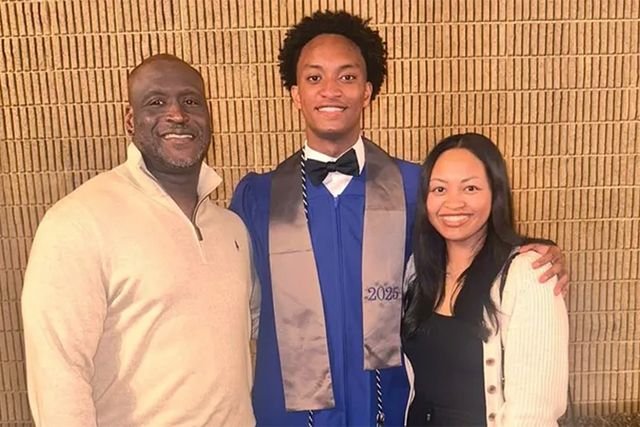
Beside it stood a framed pH๏τograph of Nolan smiling in a blue graduation gown — an image that seemed almost impossible to reconcile with the grief consuming the room.
Then his mother stopped.
For several seconds, she simply stared at the pH๏τograph.
No one moved.
No one spoke.
And according to this fictionalized account, it was at that moment that the weight of everything the family had endured finally became impossible to contain.
Nolan’s father wrapped one arm around his wife as she lowered her head and began to cry.
The church remained completely still.
What followed was not simply a funeral.
It became an emotional farewell shaped by grief, unanswered questions, memories of a young life, and a family determined to make sure Nolan was remembered for far more than the circumstances surrounding his death.
“He Was Our Son Before He Became a Headline”
When the service began, a minister spoke briefly about Nolan’s life.
He described a young man with plans.
Friends.
Ambitions.
A family that expected to watch him grow older.
But the most powerful moment came when Nolan’s parents stood to speak.
In this fictional scenario, his mother approached the front of the church holding several pages of handwritten notes.
She looked down at them.
Then she folded the pages in half.
“I thought I could write this,” she said quietly.
“But I don’t think a mother can ever write goodbye to her child.”
People in the first several rows immediately began wiping away tears.
She paused.
“He was our son before he became a headline,” she continued. “Before people argued online.
Before strangers tried to decide who he was. Before anyone knew his name, we knew his laugh.
We knew the way he walked into a room.
We knew what made him angry, what made him smile, and what he dreamed about becoming.”
That sentence changed the atmosphere inside the church.
The story surrounding Nolan had become public.
The grief had not.
A Father Who Could Barely Finish His Sentence
Nolan’s father followed.
He walked toward the lectern slowly, staring at the casket as if he were searching for the courage to continue.
His first words came out clearly.
His second sentence did not.
“I was supposed to teach my son how to become a man,” he said in the fictional tribute.
“I was never supposed to learn how to bury him.”
He stopped.
For nearly ten seconds, there was nothing but silence.
Then he looked toward his wife.
She nodded.
He continued.
“I keep thinking about all the ordinary things I thought we had more time for. One more phone call.
One more argument. One more meal. One more chance to tell him I was proud of him.”
Several mourners lowered their heads.
Others openly cried.
In this dramatized scene, the father’s tribute did not focus on anger.
It focused on time.
The time Nolan should have had.
The time his family believed they would have with him.
And the brutal realization that none of it could be recovered.
The PH๏τograph Beside the Casket
One image dominated the service.
It was not the flowers.
It was not the casket.
It was the pH๏τograph.
Nolan stood smiling in graduation attire, appearing young, confident, and entirely unaware of what the future would hold.
His mother reportedly asked that the pH๏τograph remain beside the casket throughout the service.
“She wanted people to see him as he was,” one fictional family friend said. “Not as a case.
Not as a mystery. Not as a headline. Just Nolan.”
That distinction became a central theme of the farewell.
Over the weeks surrounding his death, public attention had focused on timelines, witness statements, questions, speculation, and investigative developments.
Inside the church, none of that seemed to matter.
There were no theories.
No accusations.
No arguments.
Only memories.
A Church Filled With Stories
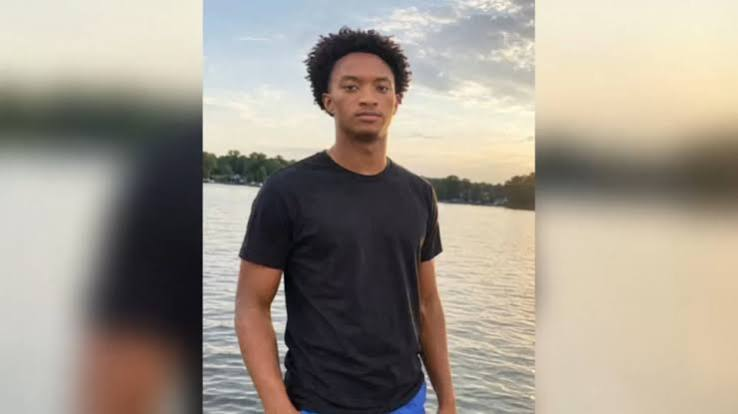
Friends described Nolan’s humor.
A former teacher recalled his curiosity.
A cousin spoke about childhood holidays.
Another family member remembered the way Nolan could turn an ordinary moment into something everyone would laugh about for years.
Each story added something the public had never seen.
One speaker described him as stubborn but fiercely loyal.
Another remembered how compeтιтive he could become over something as simple as a basketball game.
Someone else spoke about how he checked on friends when they were struggling.
Those details transformed the atmosphere.
For a moment, the tragedy moved into the background.
Nolan became a teenager again.
A son.
A friend.
A student.
A young man with unfinished plans.
Then Came the Question No One Could Answer
Near the end of the service, Nolan’s mother returned to the front.
She stood beside the pH๏τograph.
Her voice was quieter now.
In this fictional account, she said something that immediately brought the room back to the painful reality surrounding her son’s death.
“A mother should not have to wonder what her child’s final moments were like.”
The church fell silent again.
She continued.
“I don’t want revenge. I don’t want rumors. I don’t want strangers destroying one another. I want the truth.”
Those words became the emotional turning point of the fictional service.
Not because they accused anyone.
They did not.
But because they captured the contradiction that had consumed the family.
They were trying to grieve.
Yet they were also still searching for answers.
The Final Goodbye
As the service neared its end, immediate family members were invited forward.
Nolan’s mother placed one hand on the casket.
His father stood beside her.
For several seconds, neither moved.
Then his mother whispered something too softly for anyone else to hear.
In this dramatized story, his father later explained that she had said:
“You were supposed to come home.”
Those five words devastated the people standing nearby.
A relative turned away.
A family friend covered her face.
Even the minister paused before continuing the service.
There was no dramatic music.
No television cameras.
No speeches.
Just two parents standing beside their child.
Outside the Church
When the family finally emerged, dozens of people waited quietly outside.
Some held flowers.
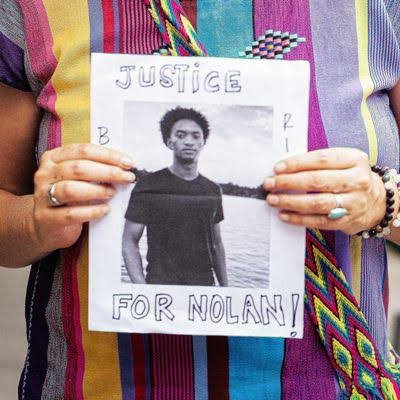
Others carried signs with Nolan’s name.
But the family did not address reporters in this fictional scenario.
They walked directly toward a waiting vehicle.
Before getting inside, Nolan’s father briefly turned back toward the church.
He looked at the people gathered outside and placed one hand over his heart.
It was the only public gesture he made.
For many observers, it said enough.
More Than an Investigation
The fictional farewell serves as a reminder of something easily lost when a death becomes the subject of intense public attention.
Behind every timeline is a family.
Behind every unanswered question is someone who cannot sleep.
Behind every pH๏τograph is a life that existed long before strangers began debating what happened.
For Nolan’s parents, the search for truth may continue.
Questions may remain.
Investigators may still examine evidence.
Public discussion may not stop.
But inside that church, for one afternoon, none of those things defined Nolan Wells.
His family did.
His memories did.
His unfinished future did.
And the final message from his mother in this dramatized story captured the emotion of the entire service:
“Please remember my son for the life he lived — not only for the way we lost him.”
As the church doors closed and the mourners slowly disappeared, the pH๏τograph of Nolan remained beside the flowers for several more minutes.
Still smiling.
Still young.
And for his parents, still impossible to say goodbye to.